Vent Selector
Equipment selection from HVAC schedules: fans, fire/smoke dampers, and accessories in the manufacturer’s own catalog
An application engineer’s workspace that reads bid-set schedules, selects the manufacturer’s fans, dampers, and accessories, and exports a reviewed selection schedule to XLSX.
- 10×
- engineering department throughputpublished YYTECH case result; method and sample not disclosed
- −90%
- processing time per projectpublished YYTECH case result; method and sample not disclosed
The client and the problem
A fan and damper manufacturer receives bid sets as PDFs from engineers and contractors. The equipment in its scope (exhaust fans, plenum fans inside air handlers, fire/smoke and control dampers, and roof curbs) is spread across mechanical schedules, and every tag names another manufacturer’s basis-of-design model “or approved equal.” Application engineers found the schedules by hand, crossed each tag to their own catalog, checked duty points on fan curves, sized actuators, and typed up the selection schedule. As bid volume grew, the only way to keep up was to add engineers.
Why it matters in the US
The selection lands in a submittal that the engineer of record reviews: approved, approved as noted, or revise and resubmit. A substitution has to meet the scheduled capacity, electrical characteristics, and listings. Fast, accurate selection lets a manufacturer quote more bids before they close.
What comes in
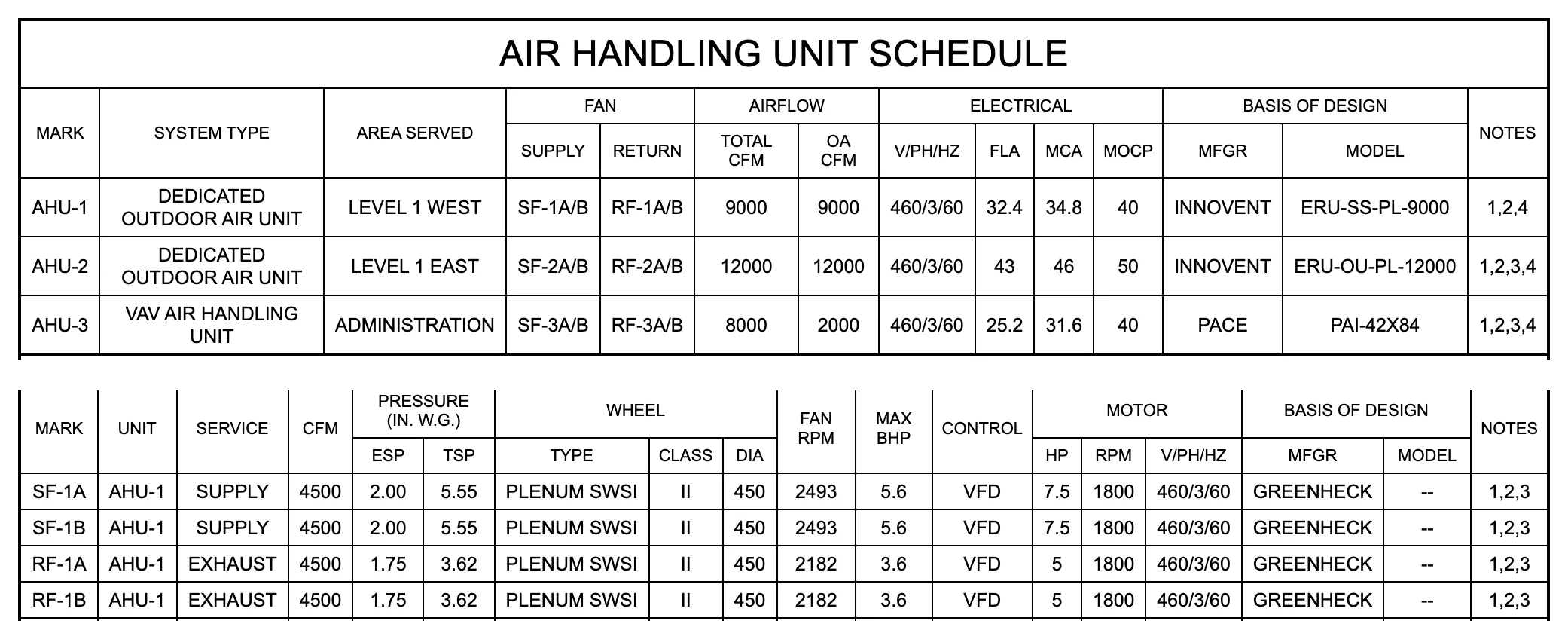
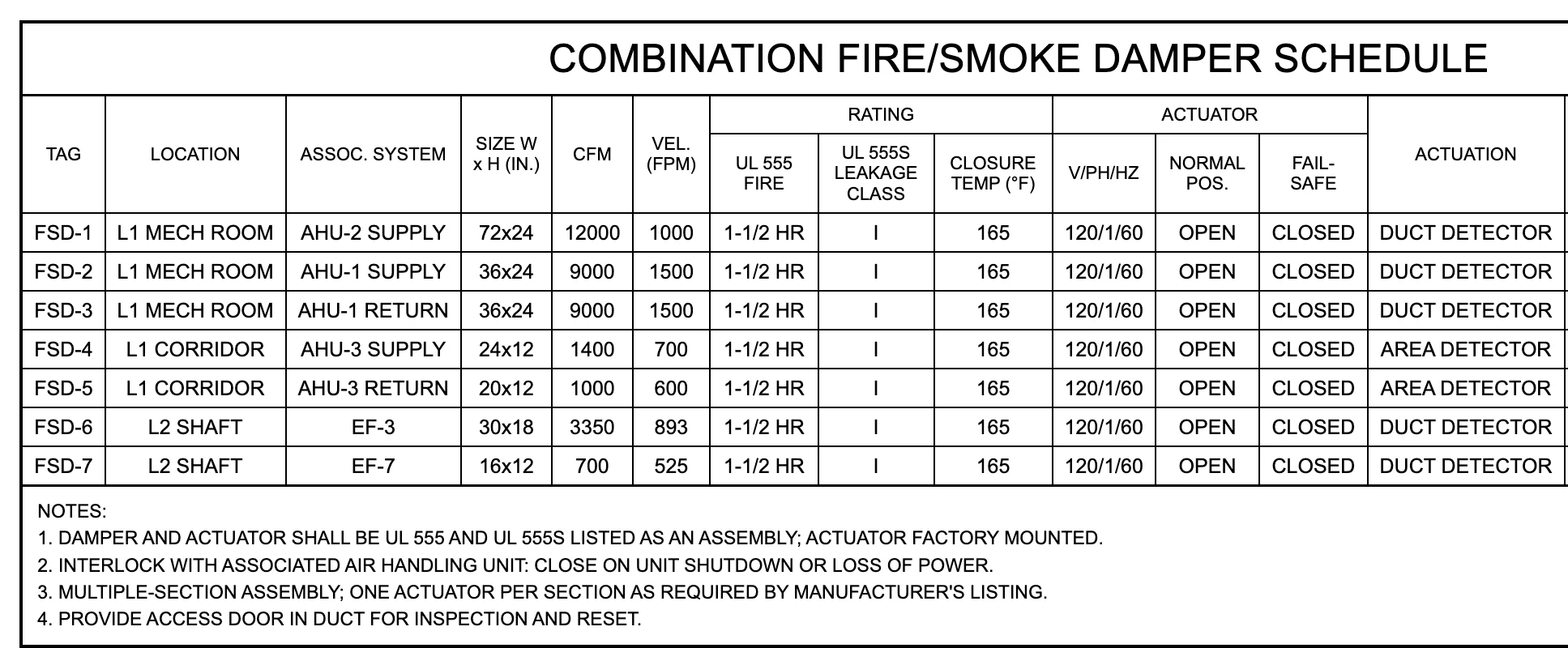
Schedules are written for people: tags instead of line numbers, CFM and external or total static pressure in in. w.g., horsepower and watts in one column, empty cells, revision clouds, and addendum notes. Air handlers are one line, but their plenum fans are scheduled tag by tag. Fire/smoke dampers come with UL 555 / 555S ratings, actuator voltage, normal position, and fail-safe position. Diffusers, louvers, and unit heaters share the sheet but are out of scope.
How selection works
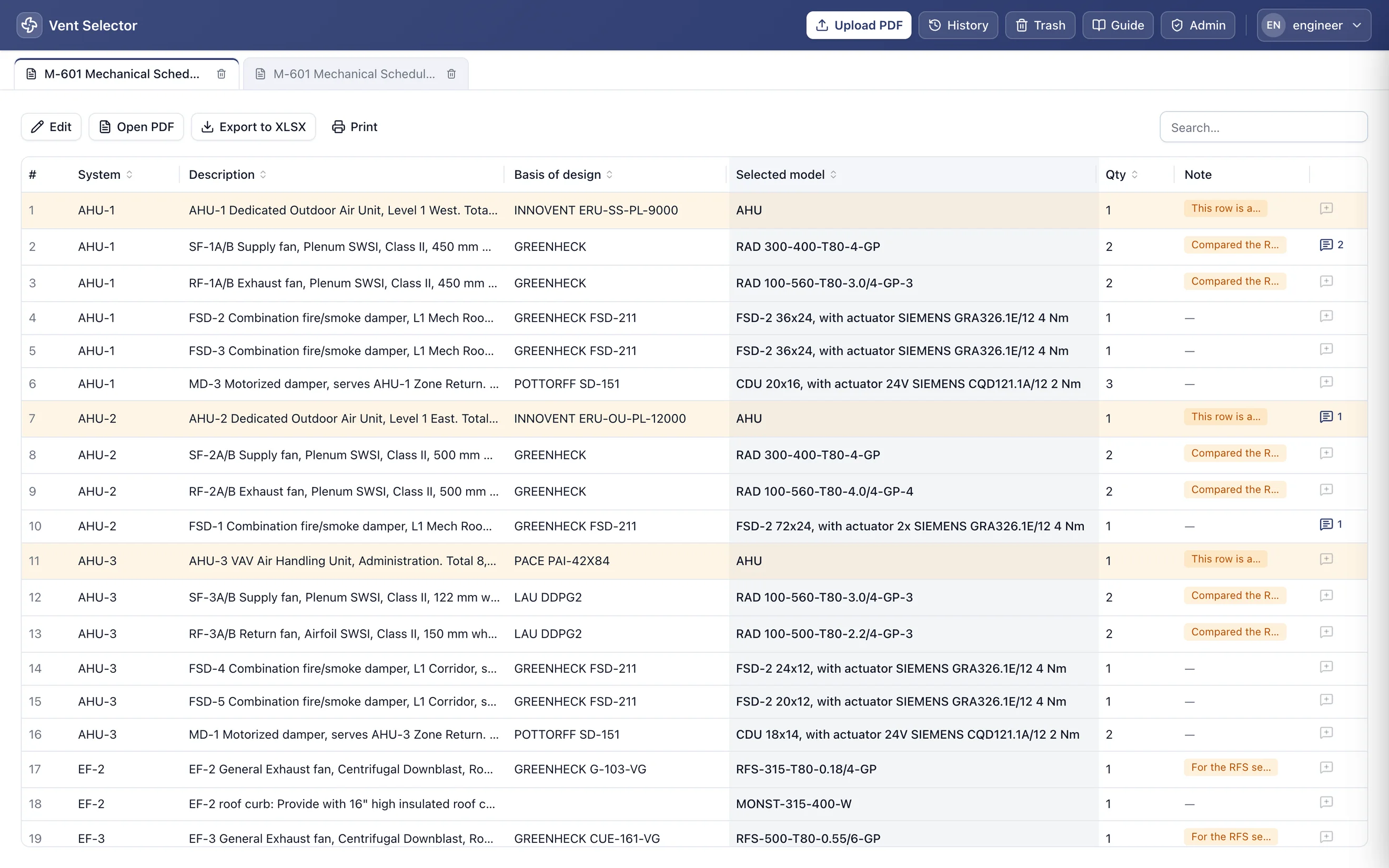
YYTECH connected document reading to the manufacturer’s engineering rules. AI reads the tables and extracts tag, system, description, basis of design, airflow, pressure, power, and size. A deterministic core normalizes series, size, and construction and sends every item down one of four routes: fans on catalog curves, dampers with actuator sizing, accessories by ordering code, or series and size. AI never eyeballs a model.
Duty point on the catalog curve
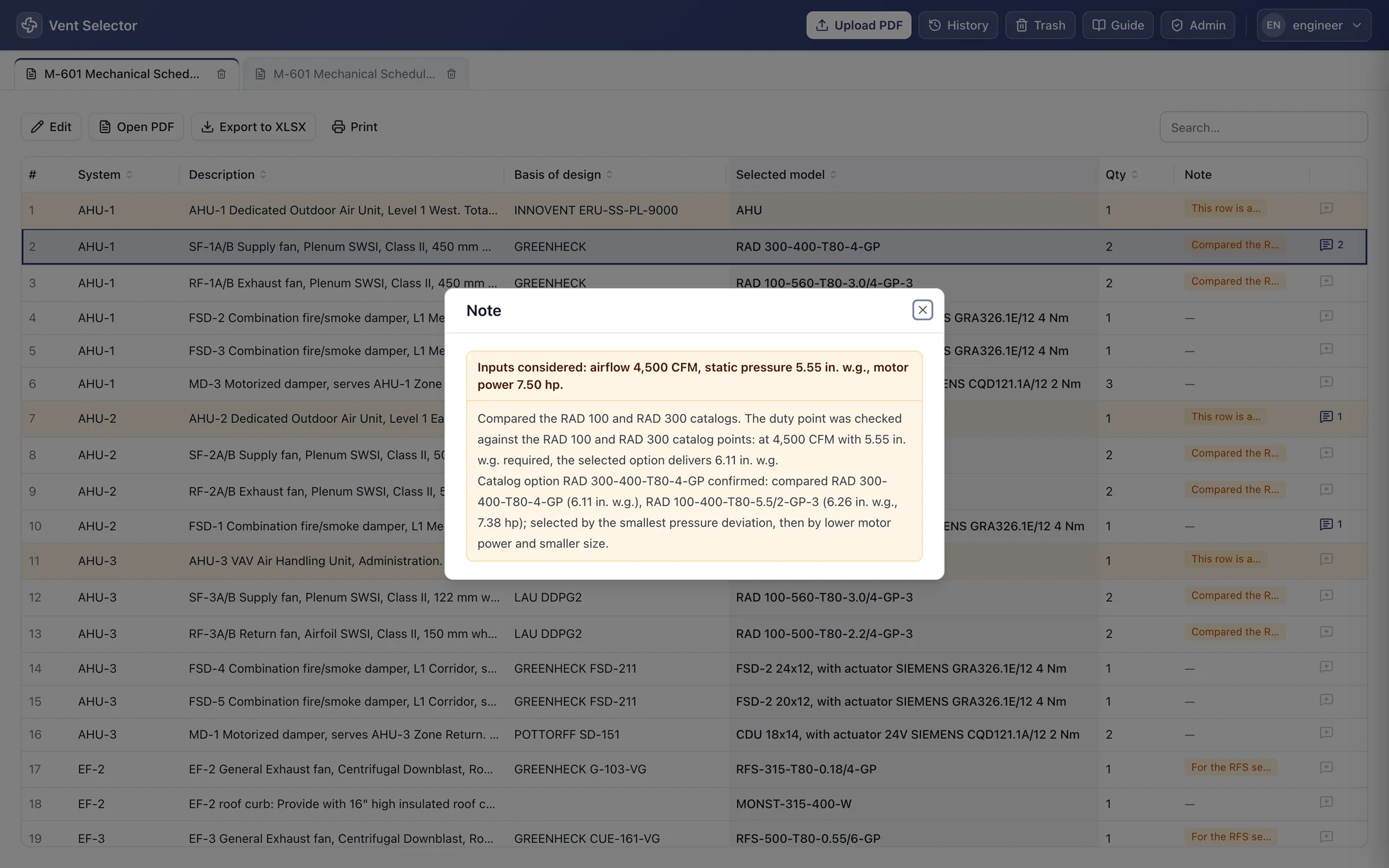
For a centrifugal fan, the system compares the best options of two series at the required airflow and ranks them by the deviation from the required pressure, then motor power, then size. For SF-1A/B (4,500 CFM at 5.55 in. w.g. total static), it selected the model delivering 6.11 in. w.g. over the alternative at 6.26 in. w.g.
Dampers and accessories
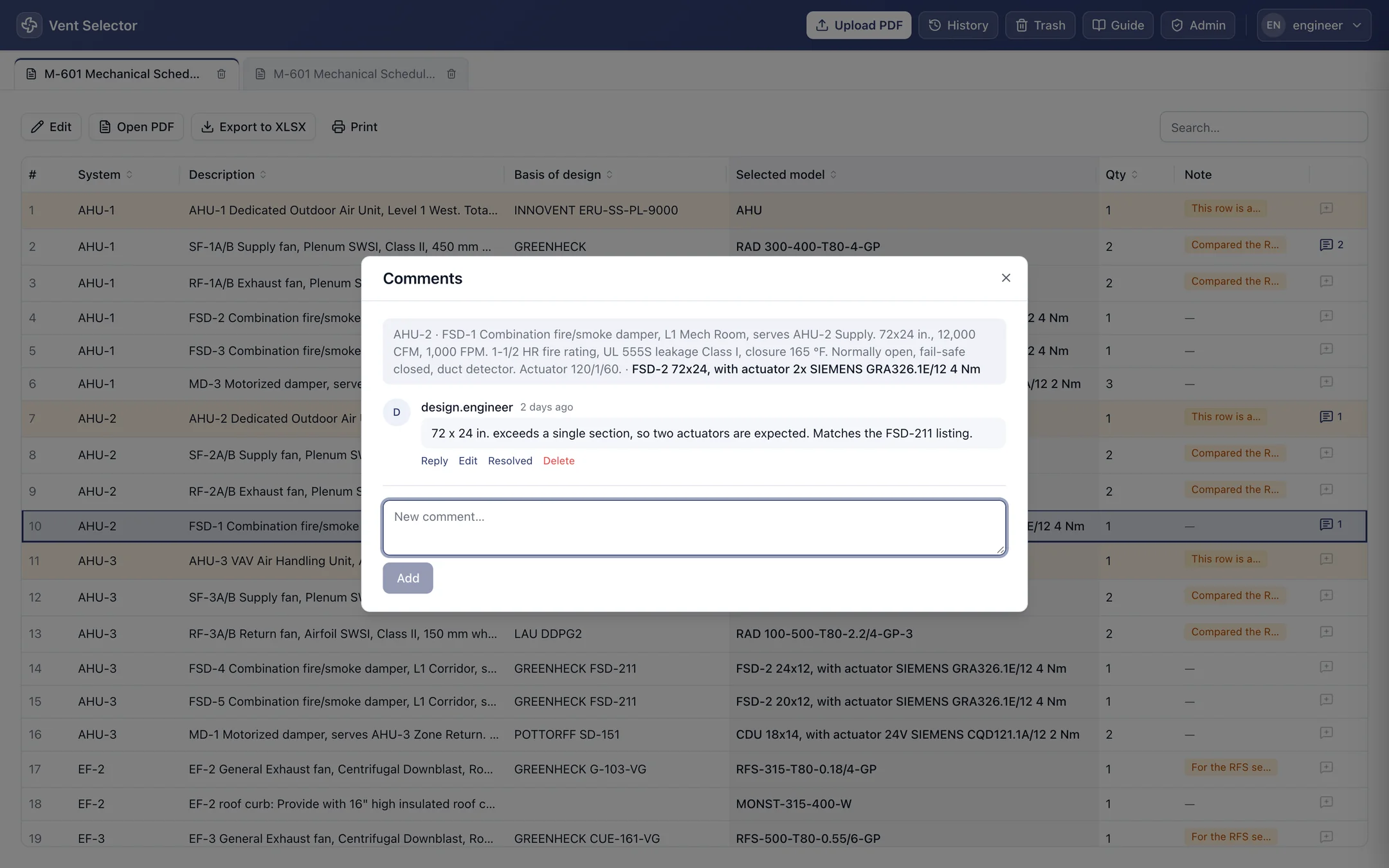
Actuators are sized from the area of one damper section: 35, 62, or 159 lb-in, with a warning above 26.9 ft². A 72 × 24 in. fire/smoke damper becomes a two-section assembly with two actuators. Roof curbs, flexible connections, and controllers take their size and construction from the fan selected for the same tag; a motorized damper takes its actuator voltage from the schedule.

Explained selections, flagged gaps
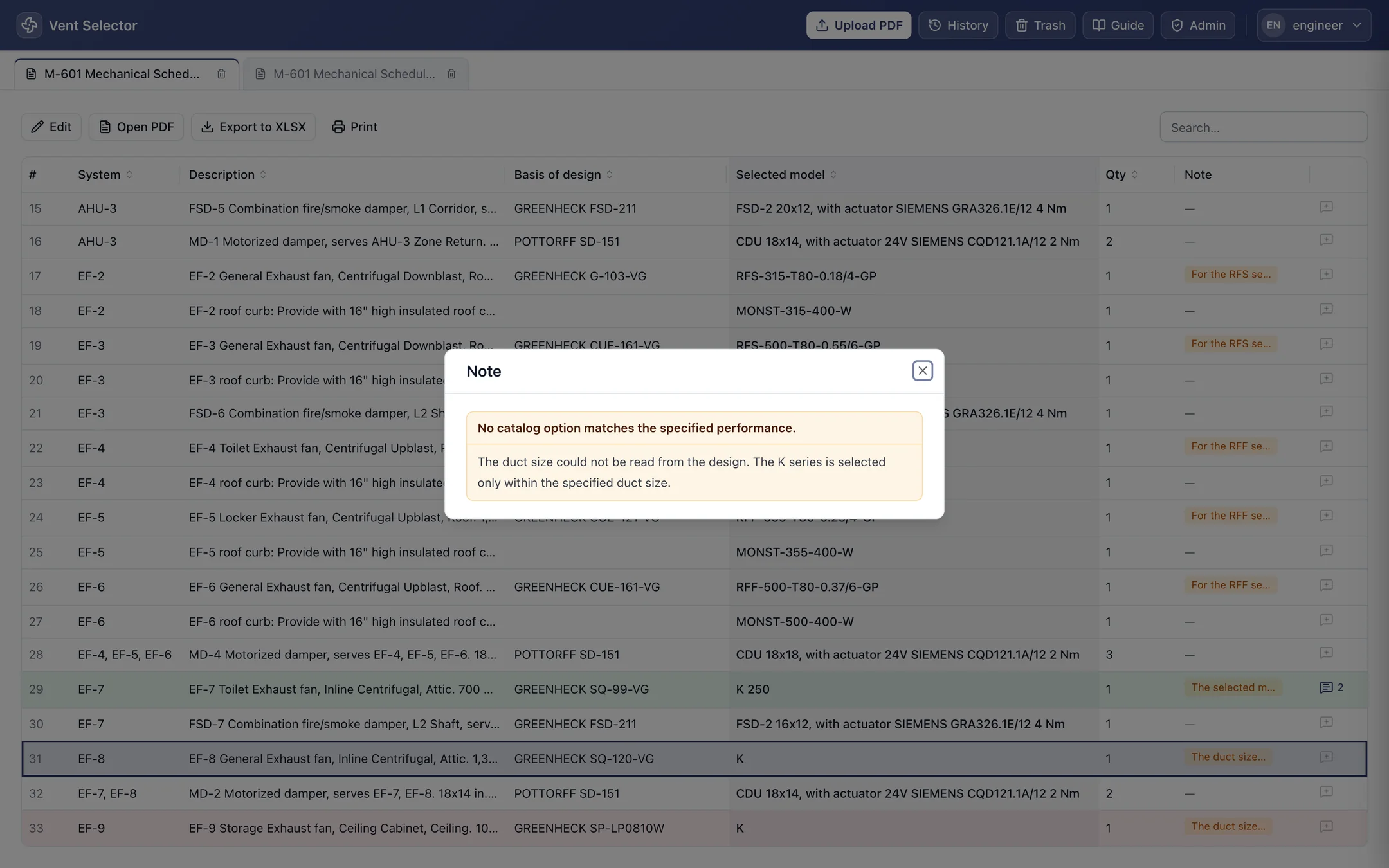
Each fan selection note lists the inputs considered, the candidates compared, and the rule that decided. When data is incomplete, for example an inline fan without a duct size, the row is flagged with the reason instead of receiving a nearest guess. The limits of automation are written down: acoustics, filters, listing acceptance, and code compliance stay with the engineer.
Review and output
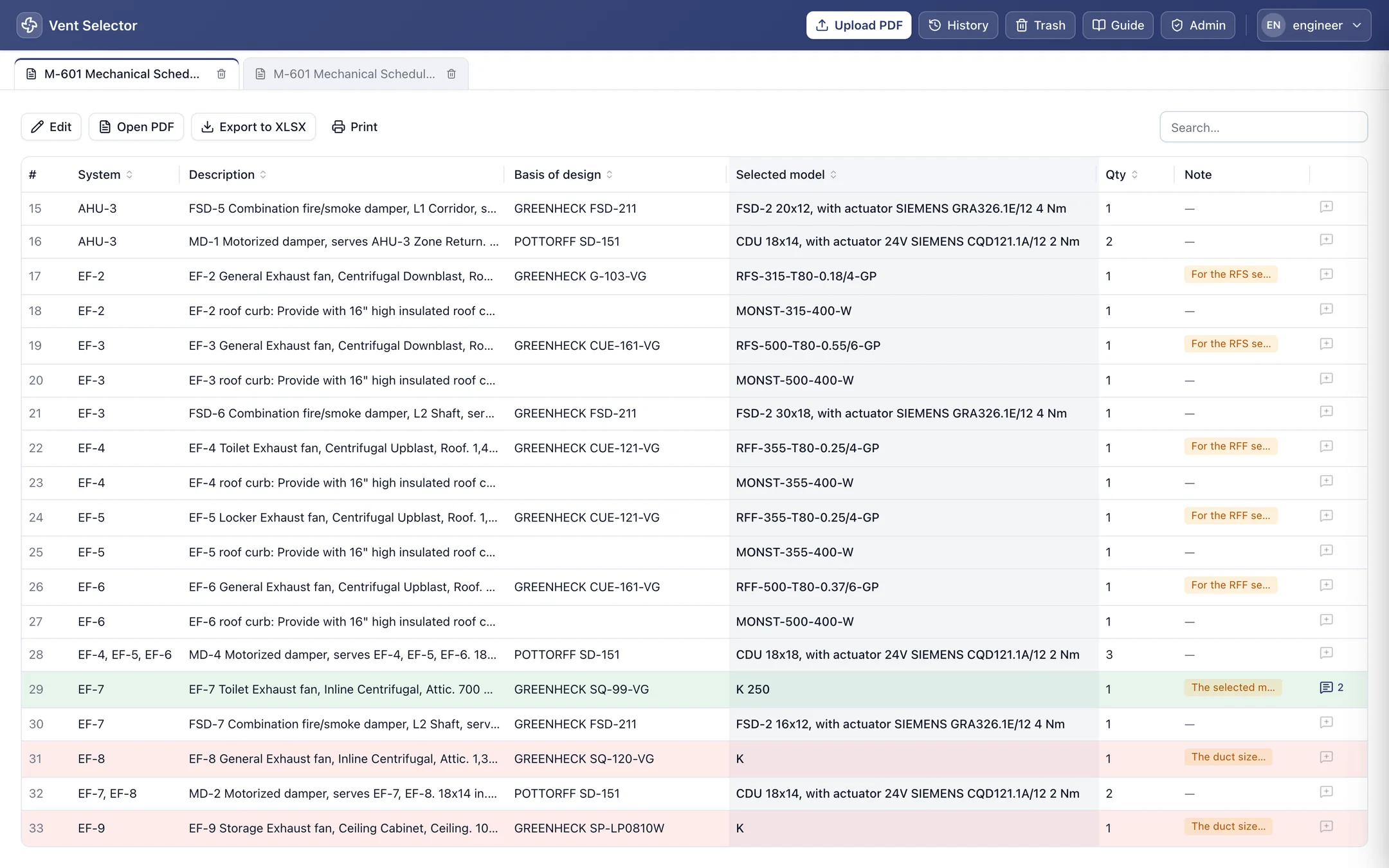
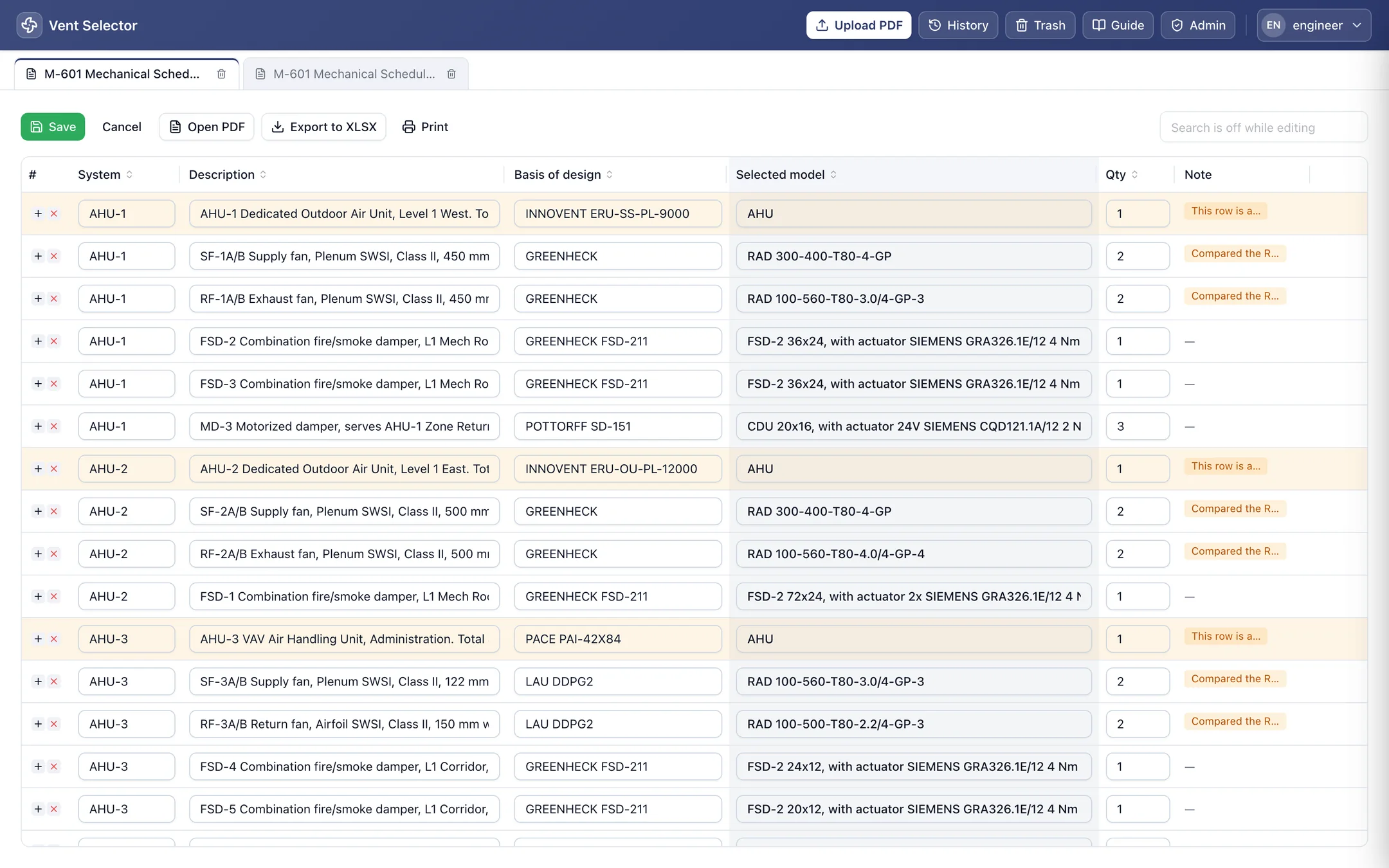
Row colors show where an engineer is needed: yellow for packaged air handlers, red for review, and green for a manual correction. The engineer edits models and quantities in the same table that shows the source data and comments on items. The result is exported as a selection schedule in XLSX with the same colors and the reasons behind every warning.
Team workflow
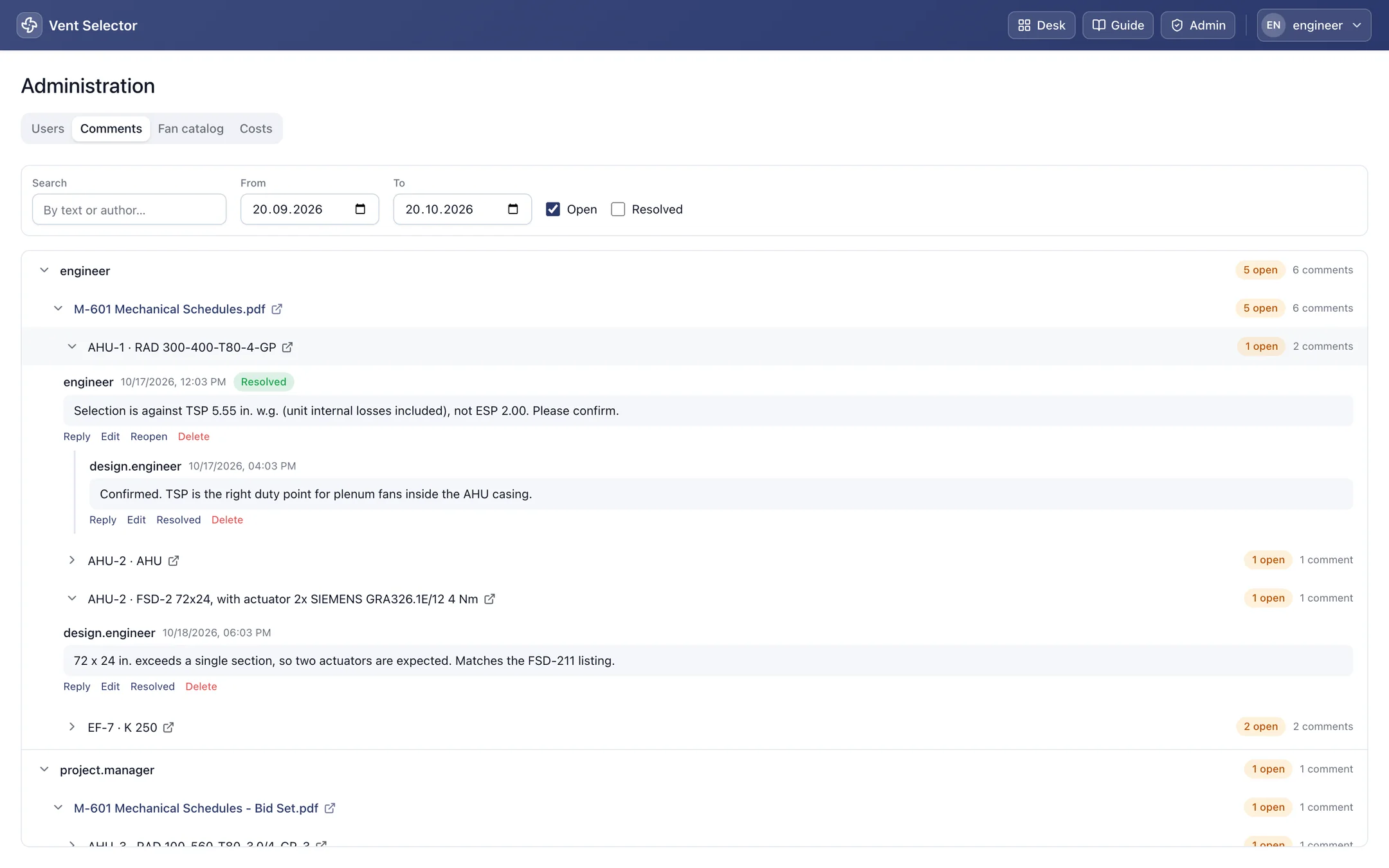
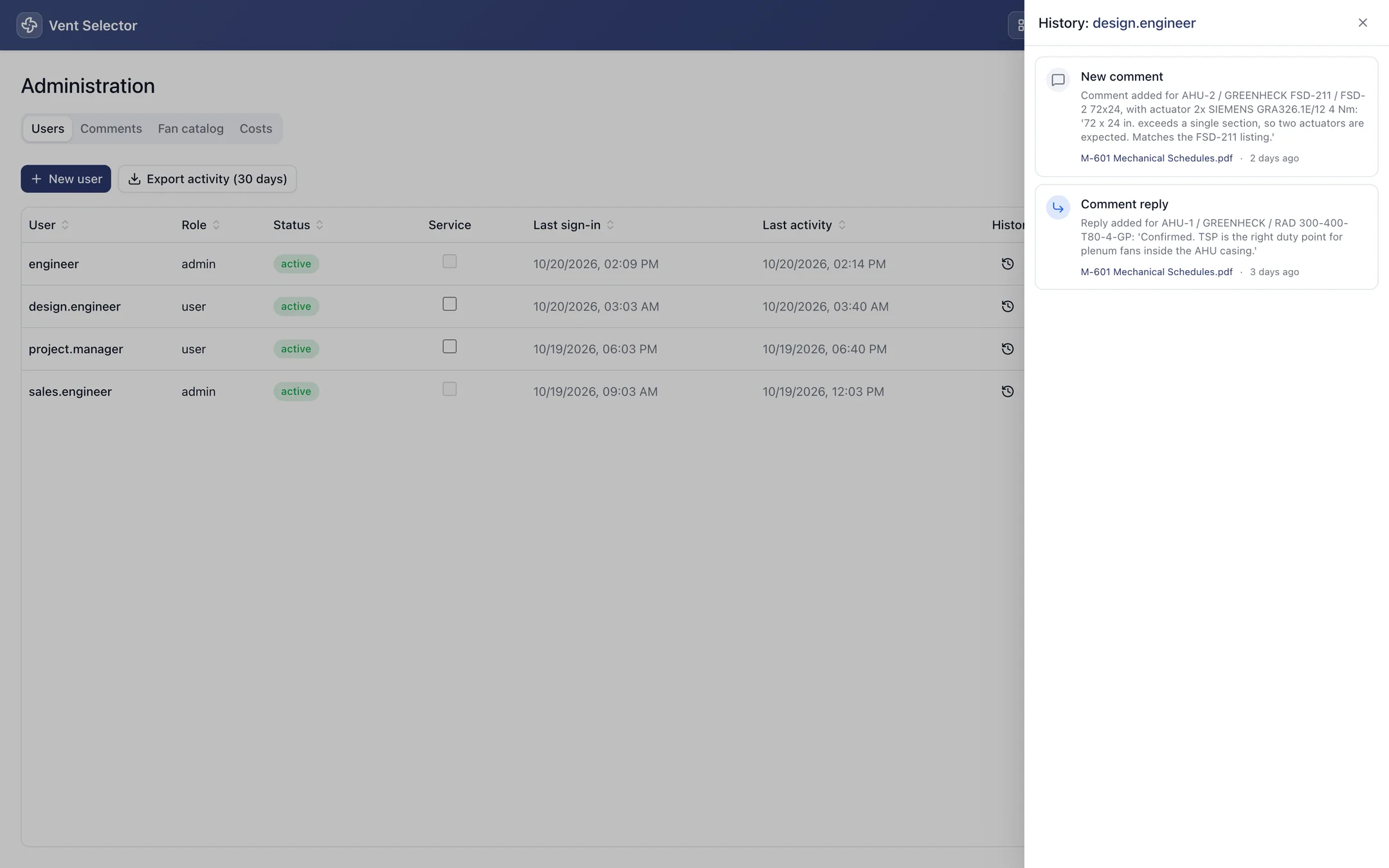
Comments stay attached to the project and the item, with replies and resolution status, and are collected in one comment log. Administrators see users, roles, and each user’s action history and can export 30 days of activity. The selection guide and the release history are published inside the system and updated together with the selection logic.
Quality control
Every standard release is checked against a reference set of four real HVAC projects and two synthetic checks on noisy damper schedules, each with a manually verified expected result. The extraction score weights recall of expected items at 80% and field accuracy at 20%. Each set has its own threshold, from 90% to 97%, and a standard release stops if any set misses it. In the September 28, 2026 run, scores ranged from 92.7% to 100%.
Deploying for a US manufacturer
The selection core stays the same; deployment loads the manufacturer’s own inputs. These are its fan catalog with AMCA-certified 60 Hz performance; its damper listings and actuator options; its series, ordering codes, and cross-reference from common basis-of-design models; sample bid sets from its market for extraction tuning and the quality gate; and its outputs: the selection schedule for submittals, XLSX columns mapped for ERP/CPQ import, and roles for engineers and reps. Code compliance stays with the engineer of record and the authority having jurisdiction.
Results
According to YYTECH’s published case on this deployment, the engineering department’s throughput grew tenfold and processing time per project fell by 90%. The source does not disclose the method or sample. Engineers now start from a finished selection and review only the flagged rows.
Customer testimonial
I saw a chance to apply AI to engineering selection and started the project. YYTECH turned that idea into a working tool: the team dug into our catalogs and performance data, built the system, and took it into production. Today it is part of our everyday engineering work.